
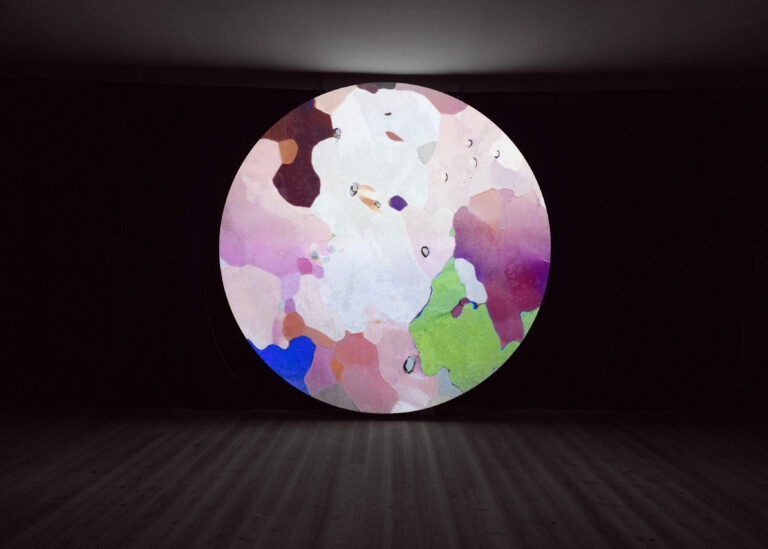
the Round Tower | exhibition: Ice Refractions
Ice Refractions – in Copenhagen, Denmark
review written by Master of Science, Bo Christiansen, KULTURINFORMATION
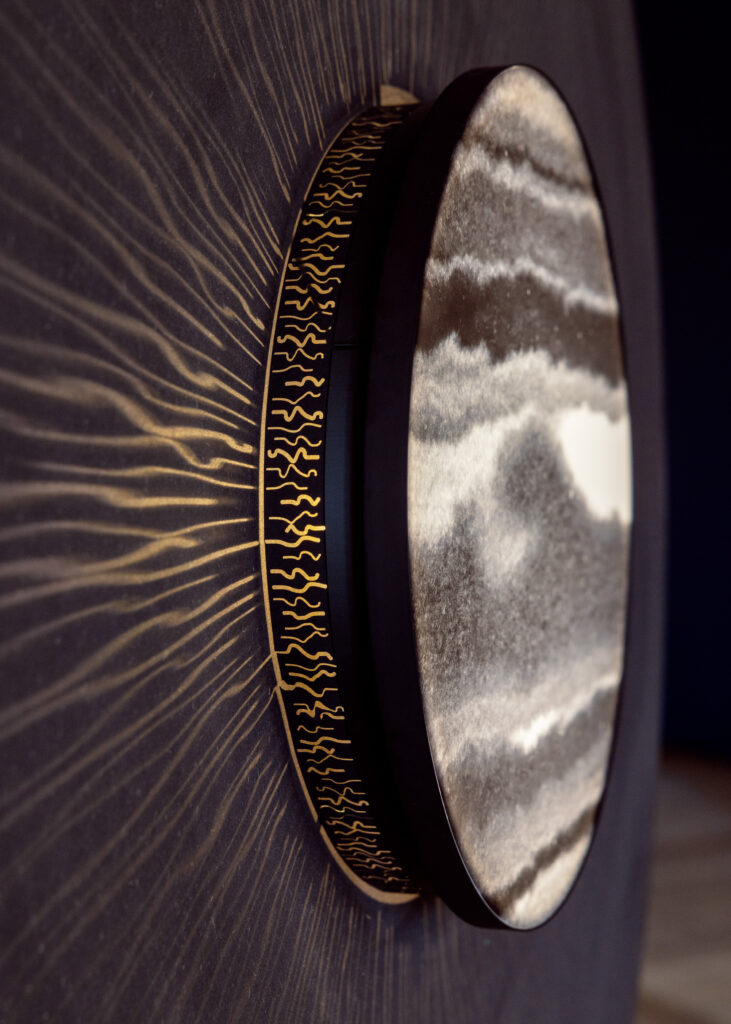
Mørkeintervaller, værk af Maja Friis. Foto: Rundetaarn
✮✮✮✮✮
' …… Let there be light: and there was light …… '
Genesis 1, 3 – American Standard Version
2026 has been designated as ‘light year’ – the 350th anniversary of Ole Rømer’s discovery of the speed of light is celebrated here. Rømer was both an astronomer, physicist, mathematician, but also an inventor and instrument maker, in addition to holding several administrative positions.
Throughout 2026, the Round Tower will be the setting for a series of exhibitions, all inspired by the phenomenon of light. The exhibitions place us at the crossroads between science and art, between knowledge and experience. But you have to be quick, because the exhibitions change every few months. The current exhibition, Ice Refractions, runs until September 20 and is about researchers’ work to extract information about the past climate from ice cores from the Greenland Ice Sheet. Through film, images, sound and poems, data, microscopic photos of ice crystals and the history of the Ice Sheet are transformed into a sensory, aesthetic and visual experience.
The exhibition is on display in the Library Hall in the Round Tower. It was created by artist Maja Friis and Visual Science Studio in close collaboration with ice core researchers from the Niels Bohr Institute (Ice, Climate and Geophysics at the University of Copenhagen).
A podcast series by Klimajournalisterne with the same title has also been produced, which elaborates on the research behind it.
We have previously written here at KULTURINFORMATION about how Greenland's ice sheet 'remembers and tells' in a review of the Isfjord Center at Ilulissat.
The ice has been there for millennia, but it has become much more interesting because of the dramatic climate changes that the ice can help us understand and put into perspective. Scientists tell about their work in retrieving detailed information about the past climate from the interior of the ice sheet, and this knowledge makes it possible to follow climate change up close and is therefore not only about the past, but also about what is happening now and what may lie ahead.
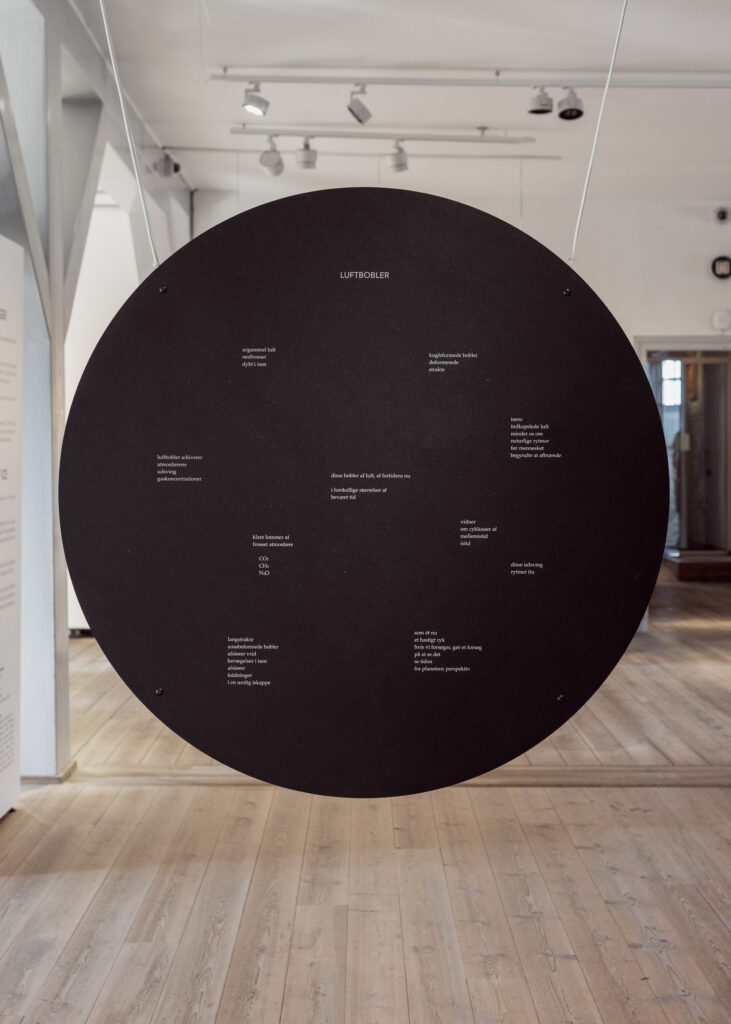
Luftbobler, digt af Pernille Kaufmann: Foto: Rundetaarn
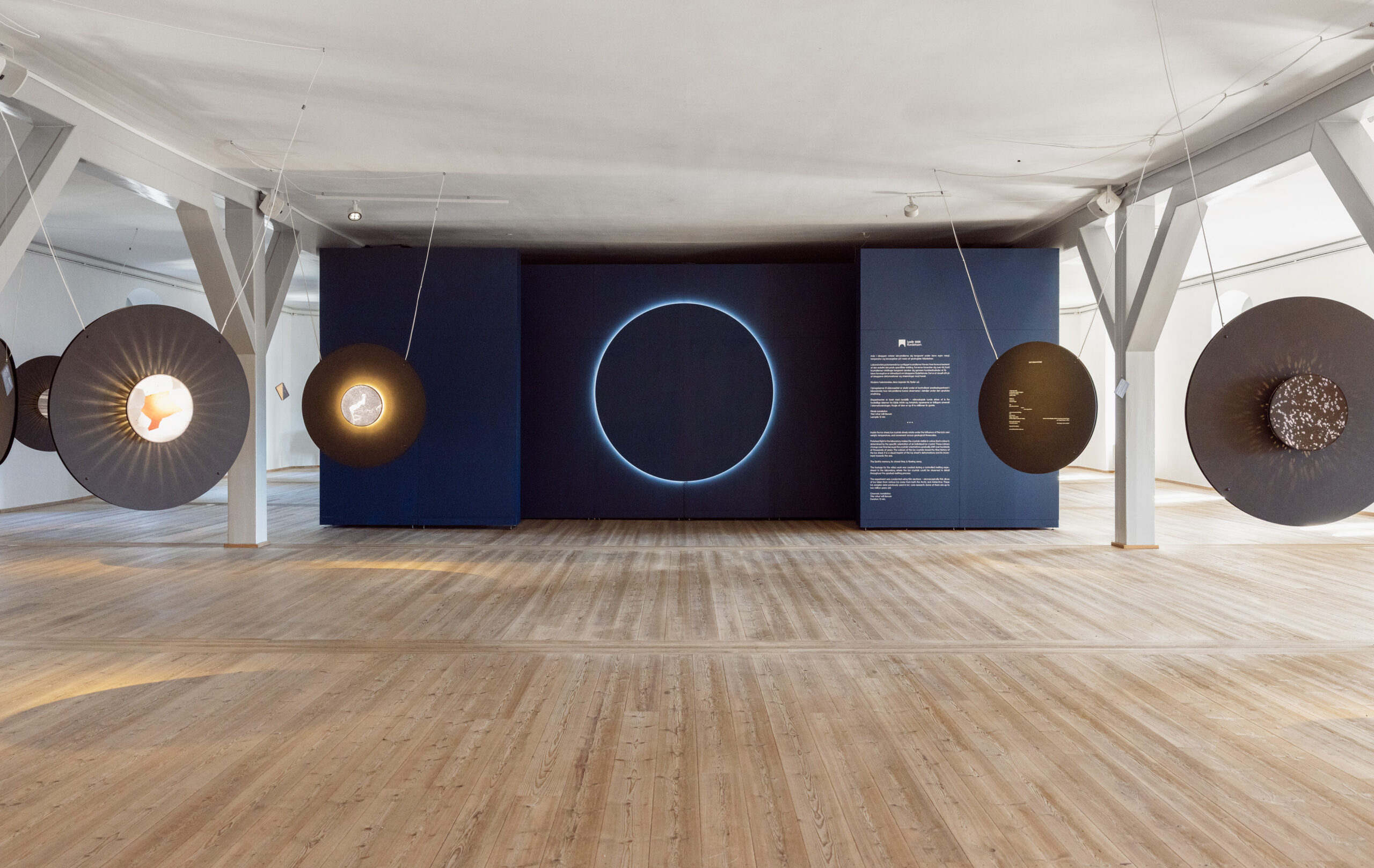
Isens brydninger. Foto: Rundetaarn
The Round Tower as a historical setting
The Round Tower is not just a tourist attraction, but also a historical center for Danish science and astronomy. The entire walk up through the Spiral Passage provides a nice mental preparation for the exhibition itself, which we find at the top in the Library Hall.
The exhibition is minimalistic, but in a way that creates space and room for contemplation and reflection. It consists of three parts.
First, Ole Rømer and his work in the Round Tower are presented. We get the story of how he discovered the ‘reluctance’ or the speed of light, and his work in constructing precise measuring instruments and thermometers. This is conveyed with a short film, original instruments, interactive models and text panels.
Deep-frozen information
In the next part of the exhibition, we move to the ice sheet. Ole Rømer invented his own thermometer and was obsessed with precise measurements. Ice core drilling is basically about the same thing: precise measurements of past temperatures. You could also say that from a tower with an observatory on top, reaching for the stars, we move to an inverted ‘tower’, a drilling 2500 meters down through the ice sheet in an attempt to uncover a distant past.
The ice cores that are retrieved are time capsules that show thousands of years of climate history, greenhouse gases and changing temperatures. Ice core researchers today measure isolated air bubbles, isotopes and crystal structures in the Greenland ice sheet to reconstruct past temperatures. They use polarized light to shine through the thousand-year-old ice crystals. Here, the light is refracted in the ice and reveals fantastic patterns and colors that tell about the state of the atmosphere when the ice fell as snow. The exhibition presents the ice as the planet’s deep-frozen climate memory.
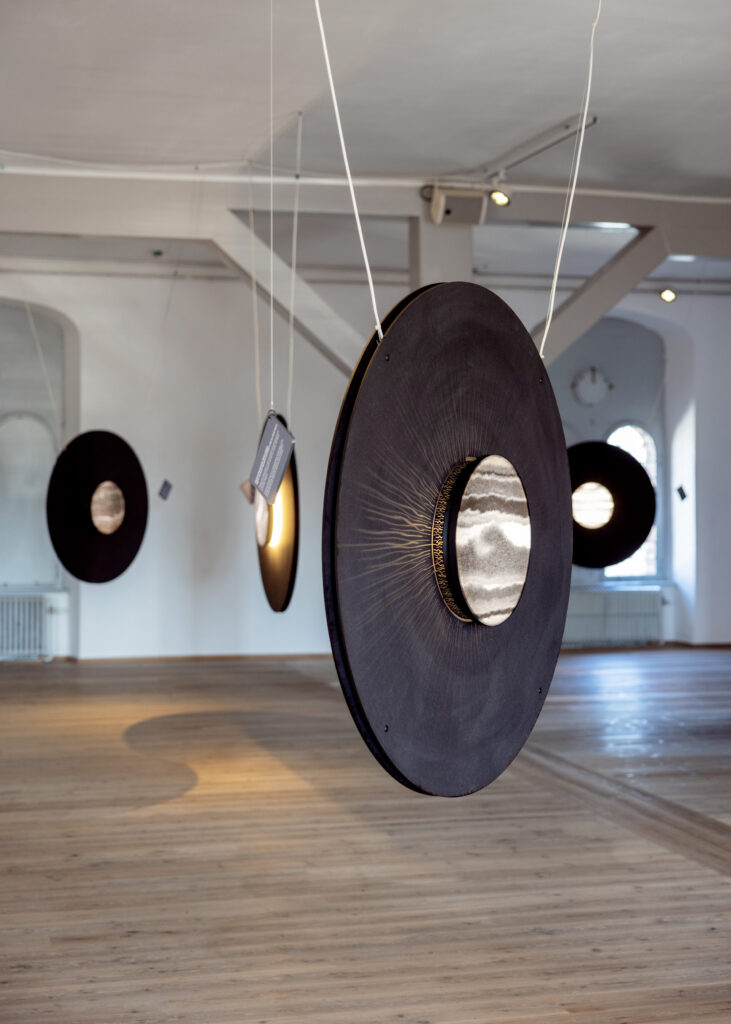
Isens brydninger. Foto: Rundetaarn
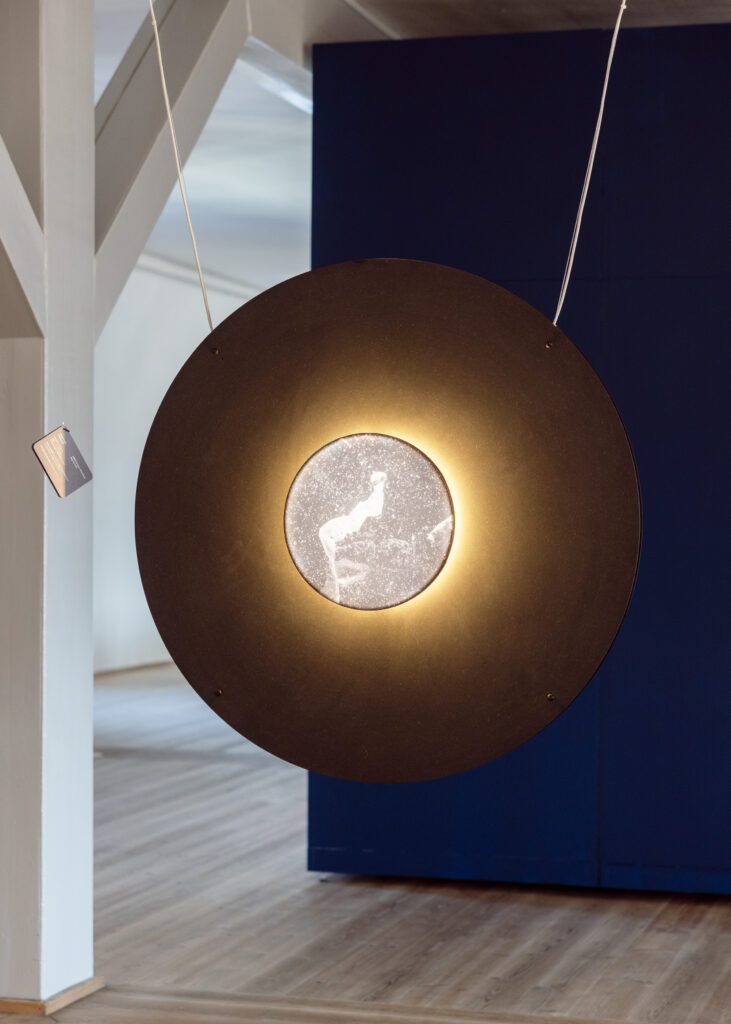
Isotoper, værk af Maja Friis. Foto: Rundetaarn
The artistic reflection
The third part of the exhibition is the artistic, meditative reflection and perspective. Through installations, aesthetic images and film excerpts, the abstract numbers and graphs from the climate reports become very present and physical.
Finally, there is a room where children in particular can process the impressions from the exhibition by drawing their own ice crystals and visualizations. There is also a small café and a shop with popular science material.
The spiral walk down and back to today's busy Copenhagen provides opportunity for reflection. The exhibition balances well and has succeeded in creating a whole of the Round Tower, Rømer and the ice cores. It is informative, sober and scientifically well-founded without becoming doomsday-like.
The exhibition is aimed primarily at families with children, but also at nerds and history enthusiasts. And climate change affects us all.
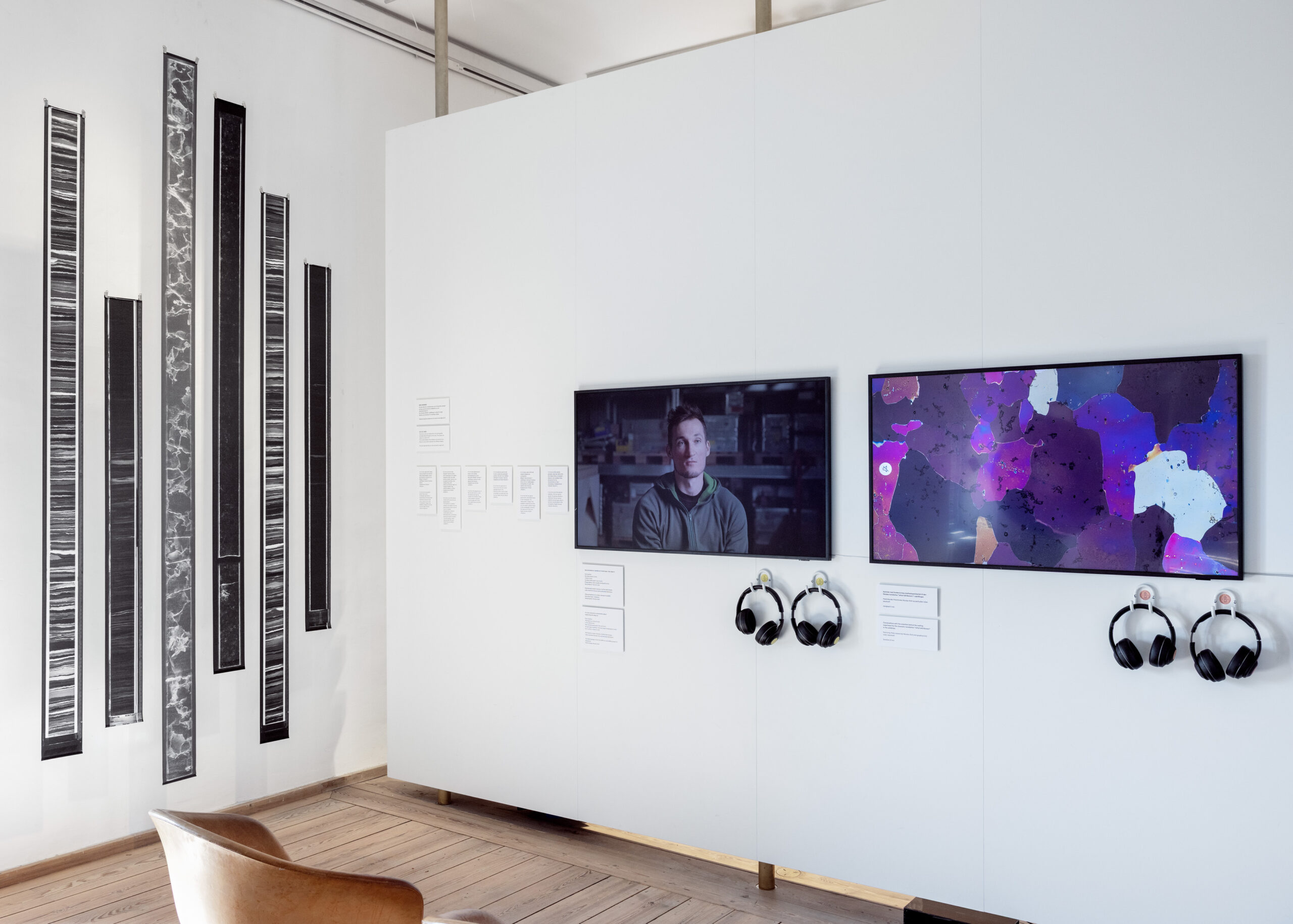
Dokumentarfilm og Behind the Scenes. Foto: Rundetaarn
the Round Tower | exhibition: Ice Refractions – visit the Round Tower here
the Round Tower | exhibition: Ice Refractions. Coverfoto: What Will Remain, videoværk af Maja Friis. Foto: Rundetaarn
MORE: What is the meaning of the rebus on the Round Tower? Find out here
the Round Tower | exhibition: Ice Refractions is a review written by Master of Science, Bo Christiansen, KULTURINFORMATION
Editor-in-Chief, Jesper Hillestrøm
the Round Tower — Ice Refractions: English Abstract
This exhibition at the Round Tower (Rundetårn) in Copenhagen — on view until 20 September 2026 — marks 2026 as light year, celebrating the 350th anniversary of Danish astronomer Ole Rømer's discovery of the finite speed of light. Created by artist Maja Friis in close collaboration with ice core researchers from the Niels Bohr Institute at the University of Copenhagen, the exhibition transforms scientific data from Greenland's ice sheet into a sensory, aesthetic and visual experience comprising film, sound, poetry, microscopic photographs of ice crystals and interactive models. The exhibition is distributed across three sections: Ole Rømer's instruments and discoveries; the science of ice core drilling — in which polarized light is used to reveal the climate history encoded within thousand-year-old ice crystals from 2,500 metres below the Greenland Ice Sheet; and an artistic, meditative reflection on climate change through installations and film. Reviewed by Master of Science Bo Christiansen, KULTURINFORMATION